How is this different from a generic AI audit?
Most AI readiness audits assess documents and models. We assess whether your organisation is operationally ready to safely govern AI systems at runtime. Policy is not enforcement, logging is not governance, and monitoring is not operational control.
What does the Readiness Sprint actually assess?
Nine governance domains for one named workflow: AI inventory, workflow risk classification, human oversight, runtime controls, escalation pathways, auditability, consent governance, operational authority boundaries, and regulatory evidence readiness.
How much does Tier 1 cost?
CHF 1,600 to CHF 2,200, fixed scope, scope-adjusted to organisational complexity. Delivered over two weeks against one workflow or deployment context. One engagement per month to ensure depth and defensibility.
What do I receive at the end?
A board-ready PDF dossier including the Regulatory Positioning Memo, Runtime Governance Gap Assessment, AI Workflow Risk Map, Human-Agent Oversight Blueprint, and a prioritised 90-Day Governance Action Plan.
What is Tier 2 and Tier 3?
Tier 2 — Runtime Governance Blueprint translates the Tier 1 diagnostic into an enforceable oversight architecture, authority stratification, and escalation logic. Tier 3 — Safety OS / RGI Implementation deploys the runtime governance control layer, audit infrastructure, and operational governance with implementation support. Both are priced upon request.
Why does the EU AI Act make this urgent?
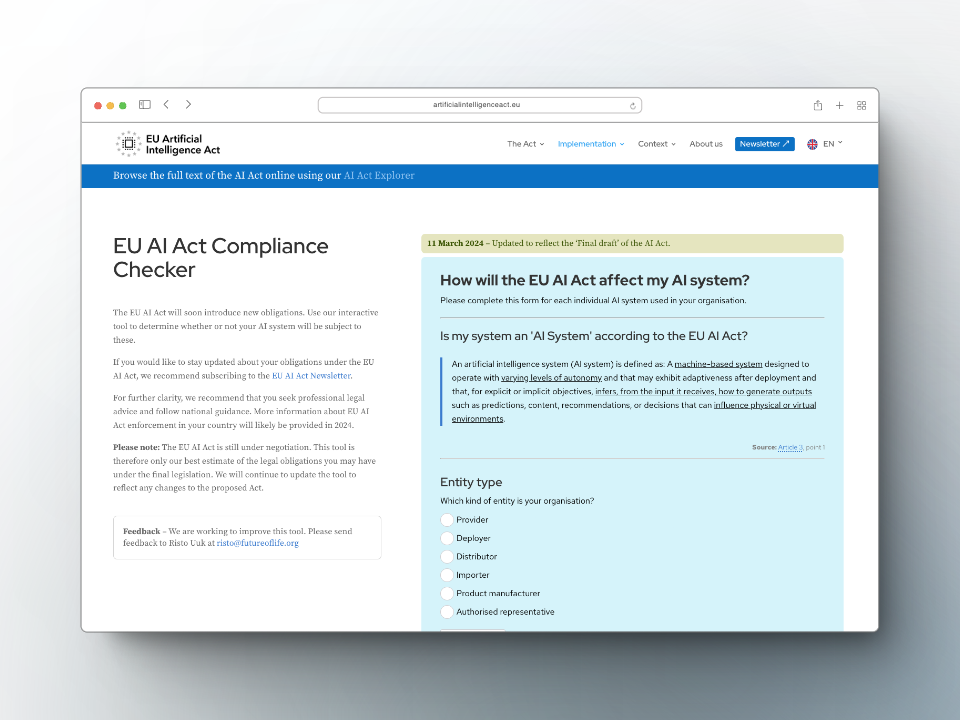
EU AI Act high-risk obligations become enforceable on 2 August 2026. If your AI lands in a high-risk category, operational, transparency, and human-oversight requirements apply by default. Teams retrofitting under deadline pressure are visible to procurement and regulators as exactly that.
Who delivers the Sprint?
Andy Squire, Founder of PatientCentricCare.AI and Architect of the Physician-as-Pilot Safety OS. 20+ years inside regulated pharma (Roche, Novartis, Takeda) and four AI healthcare programmes (Harvard Medical School, Oxford Saïd, Microsoft/INSEAD, Cambridge).
Is this a legal compliance audit?
No. The Readiness Sprint is an operational governance readiness assessment. It does not replace legal advice, formal conformity assessment, notified body review, or regulatory certification. It helps organisations identify practical governance gaps, evidence gaps, and runtime control requirements before procurement, clinical governance, or regulatory scrutiny.
Why does vulnerable-user protection matter?
Some AI workflows interact with people who may be vulnerable because of age, disability, illness, cognitive change, loneliness, or dependency. The Readiness Sprint reviews whether the workflow includes transparency, non-manipulation, escalation, and authority-boundary controls so the system supports users without exploiting vulnerability.
Does Safety OS guarantee EU AI Act compliance?
No. Safety OS and the Readiness Sprint help organisations operationalise and evidence governance controls aligned with regulatory expectations. Compliance depends on the specific AI system, use case, legal role, risk classification, deployment context, and applicable sector regulations.